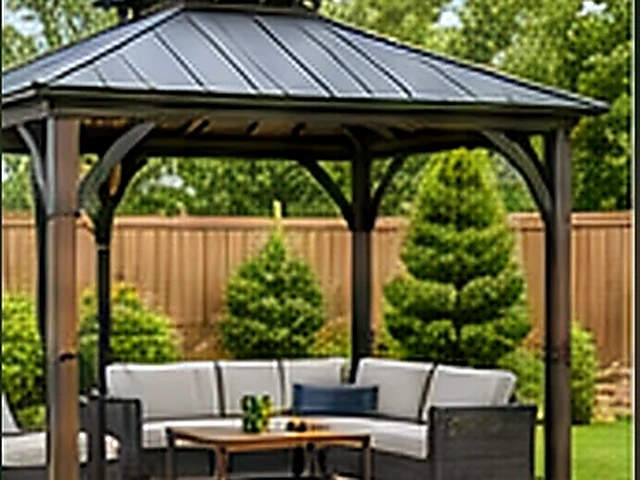
A canopy can create a covered gathering area without using the house as its primary support. The chosen kit, its footprint and the surface beneath it determine what needs to be reviewed. Identify whether you want a portable fabric canopy, a hard-roof shelter or a longer-term outdoor structure.
CA-GoodHome provides canopy and outdoor shelter installation among its exterior & outdoor services for California properties. Permanent foundations and engineered structures may require separate planning rather than being included in kit assembly.
Related paths: Exterior & Outdoor, Arbor Installation, Awning & Shade Installation.
Canopy and shelter-specific planning
A canopy or outdoor shelter is normally a self-supporting kit with legs or posts, roof fabric or panels and a defined footprint. The important site questions are whether all legs land on a stable surface, whether the frame can be squared at full size and how the manufacturer expects the shelter to resist movement.
Portable fabric canopies, hard-roof shelters and semi-permanent kits do not share the same anchoring or weather exposure. A concrete pad, deck, pavers or soil can each change the setup, and permanent footings should be described as a separate site project when the kit does not simply use surface anchors.
Canopy & Outdoor Shelter Installation Scope
Describe the intended use, such as covering a table or creating an open seating area. Include space for people to walk around posts and furniture. Screens, side panels and other accessories should be identified with the kit because they affect the configuration being requested.
Product/Structure Type and Existing Conditions
A product name and complete parts list help distinguish the frame, roof covering, braces and supplied anchors. For a previously used shelter, note missing or bent pieces and any unavailable instructions. A collection of parts from different models should not be assumed to form a compatible structure.
Site Readiness, Base and Access
Show the entire proposed footprint and the route from delivery to that location. Include changes in surface level, nearby steps and overhead branches. The assembled roof may extend beyond the leg positions, so provide overall dimensions rather than only the distance between posts. Ground preparation remains a separate question when the existing surface is unsuitable.
Materials, Fasteners and Attachment
The shelter’s attachment requirements need to match both the product and its base. Supplied hardware does not establish that every concrete, deck or paved surface can accept it. Make the instructions available for review and identify any planned accessories before a setup method is agreed.
Weather, Drainage and California Exposure
Describe where water flows through the proposed area and whether runoff collects beneath it. Include exposed locations and seasonal use plans. A shelter’s outdoor label does not mean it suits every weather condition; its intended use and operating limits should guide placement and decisions about removable coverings.
Installation vs. Repair Boundaries
Replacing fabric is different from correcting a distorted frame or unstable anchoring. For an existing shelter, describe what changed and provide photographs taken from a safe position. Avoid using damaged roof parts or adding improvised supports while arranging review. New foundations, structural changes and utility connections need their own defined scope.
Related Outdoor Services
If shade should project from a building, compare awning & shade installation. A garden passage or trellis feature belongs under arbor installation. For parked vehicles, carport installation addresses vehicle clearance and approach. A nonstandard roof or support layout is better discussed through custom outdoor structure installation than by modifying a canopy kit without an agreed design.
Frequently Asked Questions
What canopy or shelter model information should I provide?
Send the shelter model, roof material and assembly instructions. State whether the kit is portable, intended for seasonal use or planned as a longer-term installation.
New installation or repair?
Identify new assembly, relocation, replacement covering or repair of an existing frame. Include the condition of the parts and whether anchors or supports are already present.
How should I describe the surface beneath the shelter?
Provide photographs of the full footprint and tell us whether the surface is concrete, decking, paving or soil. An existing surface still needs to be checked against the selected product.
Which shelter dimensions and access details are needed?
Include overall roof width, depth and height, frame material and the available access route. Mention stairs, narrow gates and obstacles near the final position.
Call About Canopy & Outdoor Shelter Installation
Call CA-GoodHome at (223) 226-1828 with the California city or ZIP and the project details that matter most for canopy & outdoor shelter installation: footprint, surface, wind exposure, drainage and anchoring. If the work crosses into a related service, use the related links on this service to identify that scope before the call.
Related Services
Discuss your project
Share the service, California city or ZIP, and the main project details.