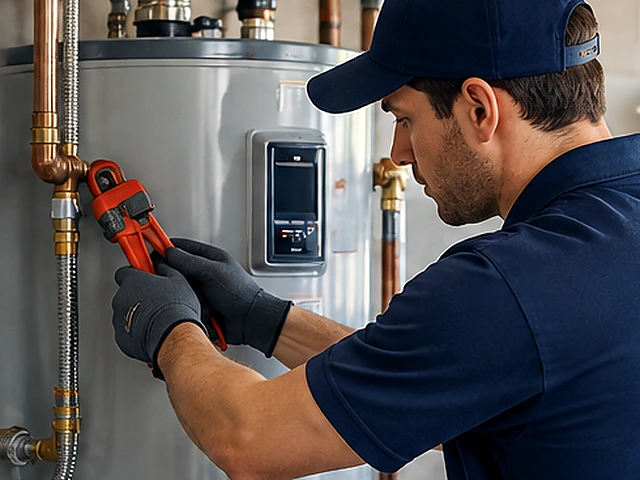
CA-GoodHome provides commercial water heater service for California business and multifamily properties. The work depends on building use, equipment arrangement, hot-water demand and the effect of an interruption on occupants or operations.
Identify whether the request is a fault investigation, equipment replacement, new installation or planned maintenance. Capacity, redundancy, scheduling and applicable requirements need project-specific assessment. A commercial service description should not be taken as a promise of immediate response or uninterrupted hot water.
Related paths: Services Hub, Water Heater Repair, Water Heater Installation.
Commercial Water Heater Service
Commercial systems need to be understood in relation to the areas and activities they serve. A central heater serving several occupied units presents a different project from a dedicated unit serving one work area.
The services hub distinguishes the heater task from related property work. Describe the affected area, who controls equipment access and whether other connected systems or ongoing projects could affect the service.
Hot-Water Demand and Equipment Sizing Context
Demand is shaped by peak use and timing, not only the number of fixtures. Explain which activities need hot water, when they overlap and whether building use has changed since the equipment was installed.
Provide any available equipment schedules or prior demand information. New sizing should follow the actual use and system design rather than copying the old unit or assuming a larger unit resolves every shortage. Distribution issues and equipment faults can also affect the observed result.
Repair, Replacement and Planned Maintenance
Use water heater repair to investigate an existing fault. Describe symptoms, error information and which parts of the property are affected, including whether the problem is intermittent or widespread.
An equipment exchange belongs with water heater replacement. Planned water heater maintenance & tune-up concerns ongoing care and records for the installed system. These tasks may be coordinated, but one should not be presumed included in another.
Tank, Tankless and Multiple-Unit Systems
Identify each heater’s type and model, and whether the units work together or serve separate areas. Multiple pieces of equipment do not automatically establish that one can cover demand while another is unavailable.
For a new arrangement or added equipment, water heater installation addresses supporting utilities and the site. Existing controls, recirculation or distribution connections need to be considered with the selected system rather than treated as interchangeable attachments.
Downtime and Access Planning
State operating hours, occupied areas and any periods when interruption would be particularly disruptive. Explain the route to the equipment, restricted-access requirements and the person responsible for making the area available.
The service sequence depends on the fault or planned work and the actual system arrangement. Discuss what can remain in use and what must be unavailable without assuming temporary capacity or a fixed restoration time. Necessary notifications and building arrangements should be coordinated by the responsible property contact.
Restaurants, Multifamily and Other High-Demand Properties
A restaurant may concentrate demand around operating activities, while a multifamily property may experience shared peaks across many occupants. Other businesses can have equipment-specific hot-water needs that differ from ordinary household use.
Describe those activities and any documented operating requirements. They inform the assessment but do not establish a universal heater size or service method. Specialized process requirements and applicable property rules need explicit review rather than a blanket compliance claim.
What to Share About the Property and Equipment
Provide the California location, property use, number of heaters and model information. Include safe photographs of the equipment area, access route and visible connections, along with maintenance records or previous repair information if available.
For a fault, describe when it began and its operational impact. For a planned change, state the intended capacity or use improvement and any proposed relocation. You do not need to diagnose the equipment; a clear account of the system and building constraints is the useful starting point.
Frequently Asked Questions
What property-use and hot-water-demand details do you need?
Describe the building use, activities requiring hot water and peak periods. Include changes in occupancy or operations that may have altered demand.
What information should I provide about the number and arrangement of water heaters?
List the heaters and models and whether they serve shared or separate areas. Do not assume multiple units provide usable backup capacity without assessment.
How should I describe a repair, replacement or maintenance request?
State the current fault or planned goal and provide service history. Repair, equipment exchange and routine upkeep have different scopes.
What access/downtime constraints matter?
Provide operating hours, equipment access arrangements and activities affected by interruption. Discuss the sequence without assuming immediate response or continuous service.
Call About Commercial Water Heater Service
Call CA-GoodHome at (223) 226-1828 with the California city or ZIP and the project details that matter most for commercial water heater service: building use, hot-water demand, equipment arrangement, downtime constraints, access and maintenance/replacement goal. If the work crosses into a related service, use the related links on this service to identify that scope before the call.
Related Services
Discuss your project
Share the service, California city or ZIP, and the main project details.